Monday, September 23, 2013
Specifications Acer Aspire V5 431 14 inch screen 2GB 500GB 1 5GHz

Screen
Aspire V5-341 screen size of 14 inches with a resolution of 1366x768 pixels and using glossy type screen. Lack glossy type screen is now used on a light-filled room or outdoors. But do not worry just yet .. For all that can be overcome by increasing the brightness of the screen. When users see from the left / right, the view angle included either because the rate of change in just a few shades. Unlike when users see from the above, the rate of change shades look.
Design

Keyboard Acer Aspire V5-431 using chicklet type keys are large and ergonomic. So when used to type in a long time, your fingers do not feel tired, and the user needs to press hard on the keys.
Space large touchpad and left and right click functions together, if you are not accustomed to using the touchpad of this type may be a bit difficult.
Completeness

Acer Aspire premium features amazing V5-431, which included USB 3.0, Opticakal Drive which is immersed in a slim casing design.
Replacing the battery and memory upgrades Aspire V5-431 can be done easily by the user directly. Aspire series V5 chassis thinness is not wearing unibody adopt Ultrabook class.
Performance

Performance Acer Aspire V5-431 results are quite good. with prossesor Intel Pentium 987 and has integrated graphics with Intel processors, the notebook is capable of running applications middleclass play 3D games smoothly.
Play 3D games such as Left 4 Dead 2 could lower settings with over 30 FPS and a resolution of 1024x768.
This notebook uses Intel HD Graphics 4000 with 128MB, of dedicated system memory.
Battery
The capacity of the battery Acer Aspire V5-431 2500mAh and can survive in 4 hours 47 minutes. Power 2500mAh battery for this notebook feels small, but if you look at the ability of the resulting time, we feel pretty awesome.
Final Conclusion
Acer Aspire V5-431 has dimensions topis such as Ultrabook, and this is the main attraction compared to other series notebooks, but not like a heavy burden ultrabook class. This notebook is very convenient to carry wherever you go, because the weight is reduced unlike the 14-inch class sizes other notebooks.
That dancing again is notbook price is quite affordable by you, as well as the features of USB 3.0 ports, a satisfactory performance for high-end applications, and capable of running 3D games with certain settings.
Casing + solid
+ Thin
+ Ergonomic Keyboard
+ The USB 3.0
+ Long battery life
+ Price is quite affordable
- Touchpad slightly less convenient

Specifications Acer Aspire V5-341
Processor: Intel Pentium 987, Speed 1.5GHz
Chipset: Intel HM70
Graphics: Intel HD Graphics
Display: 14-inch WXGA, LED backlit display, 1366x768 pixel Resolosi
RAM: 2GB DDR3
Hard Disk: 500GB
Connection: Bluetoth 4.0. Wi-Fi 802.11 b / g / n, HDMI port, USB 3.0 port, USB 2.0, Web Cam, D-Sub, RJ-45, LAN, Gigabit
Optical Drive: DVD Writer
Battery: 2500mAh
Dimensions: 23x342x345mm
Weight: 2.1kg
Posted By: Muhammad Samsul

Saturday, August 10, 2013
Apple 15 inch MacBook Pro mid 2009

The standard top end Macbook Pro has the following hardware specifications:
Build and Design
Since their introduction in October 2008, the unibody Macbook Pros have been manufactured from one single sheet of aluminium. Apple has improved on this design with the latest Macbook Pros, by removing the battery panel from the underside of the laptop. This results in a perfectly smooth finish on the bottom of the Macbook, but at the same time removes the ability for the user to remove the battery.

The seamless smooth underside of the Macbook Pro
Manufacturing the entire laptop from one single sheet of aluminium results in a rigid chassis void of joins. This means that there is less chance of fractures or breaks developing on the case. Also, given the properties of aluminium, the laptop is very unlikely to crack or break. However, aluminium is a relatively soft metal, so it might deform should heavy pressures be applied to it, such as physically sitting on the laptop. Aluminium is also a conductive material, so the heat is spread through the entire computer, providing more effective cooling, but also making the entire computer mildly warm to the touch after long periods of intensive processing. This is especially noticeable when running Windows.

Macbook Pro running Microsoft Windows Vista
In the hand, the Macbook Pro feels portable and comfortable. This is mainly because of the texture of aluminium, and the fact that the laptop is less than 1-inch thick. But weighting in at just under 2.5kg, the 15” Macbook Pro is light for a 15.4” laptop.
Aside from the glass bezel around and covering the glossy display of the Macbook Pro, the laptop is not highly vulnerable to fingerprints and smudges. However, the hinge connecting the monitor to the base of the laptop is occasionally not sufficiently rigid to hold the screen in place when the laptop is carried around with the screen open. Therefore, it is recommended not to carry the laptop around in this fashion.
Display and Sound
Apple has claimed that the displays on the new 15” Macbook Pros have “60% greater colour gamut” than the previous generation, which means that the new Macbook Pro displays can display a significantly wider range of colours. The new 15” Macbook Pros now rival the excellent monitors found on the 17” Macbook Pros, with darker blacks to brighter whites. Viewing angles, especially horizontal ones, are also very impressive on the 15” Macbook Pro, as can been seen on the following photos:


Viewing angles of the Macbook Pro screen. Horizontal viewing angles are very impressive, while vertical angles are as expected from a notebook screen. Note that the brightness is not turned to max – max brightness was a bit too much for my eyes
Of course, the Macbook Pro display still falls short when compared to a stand-alone MVA, PVA, or IPS display. But for a laptop, it is definitely one of the best in the market to date. One particularly nifty feature of the Macbook Pro is how it adjusts the brightness of the display depending on the brightness of the environment. This feature has been available in Macbooks since Apple released the unibody models, and can be turned off in the System Preferences.
The speakers in the Macbook Pros, like speakers in most notebook models, haven’t improved much over the years. They are louder than their 13” counterparts, but a pair of decent stereo headphones or dedicated speakers will sound much better.
Keyboard and Touchpad
The 15” Macbook Pro has a full size backlit Chiclet keyboard. I personally greatly enjoy the Chiclet design, and find it very easy and quiet to type on.

Macbook Pro keyboard and mouse.
Having been a user of Apple keyboards for several years, I have overcome all the initial difficulties I had when I first switched. But, some users might need to get used to the narrower “Return” or “Enter” key, as well as the lack of a dedicated forwards delete key. However, once new users realise that the Command key should be pressed with the thumb instead of their little finger, they should have no difficulties in adjusting to the Macbook Pro’s keyboard.
The backlighting on the keyboard is activated automatically in low light conditions, illuminating the entire keyboard. Just like the automatic adjusting of the display’s backlight, the automatic illuminating of the keyboard can be disabled in System Preferences, and the brightness of the illumination can be adjusted with the keyboard on the fly.

Macbook Pro’s illuminated keyboard
The multi touch trackpad on the 15” Macbook Pro has no physical buttons. This is because the bottom part of the trackpad can be pushed down, acting like a physical button. This design, which was introduced with the unibody Macbooks, has received mixed feelings from users, some praising it while others find it impossible to use. I personally find it not too different from the conventional trackpad with physical buttons, and think it is a very good way of achieving the aesthetically pleasing design without compromising on functionality.
In terms of performance, the trackpad works flawlessly in Mac OS X. There is also an array of options for performing a right click, from tapping the trackpad with two fingers, to physically pressing down on different areas of the trackpad.
In Microsoft Windows however, it is a totally different story. The default Boot Camp drivers offer very limited configurations and customisations for the trackpad, and the sensitivity of the trackpad is slightly oversensitive, making it flimsy to operate. This issue might be fixed with the release of Snow Leopard and new Boot Camp drivers, but in the meantime, I can only recommend users to get an external two-button mouse for use in Windows.
Heat and Noise
The Macbook Pro has excellent temperature management in OS X. It will remain silent almost all the time, and will cool down rapidly once idling. It is a very different story in Windows however, where the laptop runs noticeably warmer even when idling, and it takes longer to cool down. Still, the two fans in the Macbook Pro are very quiet, as is the default 500GB Hitachi hard drive.

Macbook Pro temperatures under light load
When under intensive load for long periods of time, the underside of the Macbook Pro does become rather uncomfortably warm for use on the lap. The top of the laptop also becomes mildly warm in that situation, due to the conductive properties of aluminium.
Obtaining an accurate reading of the temperature with the laptop under stress was rather challenging because of the highly efficient cooling system. The following screenshot was obtained following an immediate restart after running several benchmark tests under Windows.

Macbook Pro temperatures following benchmark tests in Windows
Ports and Expansion

Ports on the left side of the Macbook Pro.

Right side of the Macbook Pro, showing the Kensington Lock port and the slot loading Superdrive

Front of the Macbook Pro, showing the Infra Red sensor and the power indicator

Back side of the Macbook Pro, with the display hinge and no ports
For a 15” laptop, the Macbook Pro features surprisingly few ports, and the few ports it does have received very strong and mixed views from users.
Apple has included a SD card slot in their Macbook models. This is very welcoming for users who have been requesting the feature for many years, but the slot is not multi-purpose and only supports full size SD cards. On the 15” Macbook Pro models, Apple has removed the Expresscard slot. This has infuriated many users who rely on Expresscard devices for expansion.
The Firewire port on the Macbook models have also been changed from Firewire 400 to Firewire 800. The increase in speed is a welcome change, but the Firewire 800 port is not directly backwards compatible with Firewire 400 devices. An additional converter is required to connect Firewire 400 devices to a Firewire 800 port, and this has received strong criticism from many users.
The Mini DisplayPort port on the Macbook Pro supports external displays up to 2560x1600. This means that it is possible to connect the 30” Apple Cinema Display to the Macbook Pro and run it at full resolution. However, Mini DisplayPort is licensed by Apple, and therefore requires an additional adaptor to convert it to other more mainstream display connectors, such as VGA, DVI, and HDMI.
All Macbooks and Macbook Pros have slot loading optical drives, meaning that mini-discs cannot be used on the Macbooks as they will become stuck in the drive. The battery indicator at the side of the laptop is an entertaining feature, although its usefulness is rather limited.
Both USB ports on the 15” Macbook Pro are located on the left side of the laptop, which would significantly handicap users who require the port in a more convenient location on the laptop, such as right handed users of the Apple wired Mighty Mouse. The only area in terms of ports where the 15” Macbook Pro improves on the 13” Macbook Pro is the presence of separate Audio-In and Audio-Out ports.
At home, I personally have my Macbook connected to my gigabit Ethernet network, hooked up to a 24” monitor which has a built in USB hub, and wired up to a 2.1 sound system. In that respect, having all ports on one side is useful. However, those with slightly different requirements than mine might experience difficulties and limitations when expanding their Macbook Pro with peripherals.
Performance and Benchmarks
Below are a number of results from benchmark test run on the 2.8Ghz 15” Macbook Pro.
Xbench:
In OS X, the Xbench benchmark test was run multiple times with both the nVidia 9400M and the nVidia 9600M GT.
With the 9400M, results peaked at 151.41 points, and bottomed at 138.33. With the 9600M GT, results peaked at 151.77 points, and bottomed at 147.92. From the results, it is clear that the bottlenecking factor of the Macbook Pro is its 500GB Hard Drive. For the 9400M, there is a clear impact on system RAM as it is shared with the GPU.
Overall, the 2.8GHz 15” Macbook Pro shows an overall improvement of 4.34% over the previous top end (2.66GHz) 15” Macbook Pro (145.43), and an overall improvement of 7.53% over the next configuration (2.66GHz) 15” Macbook Pro (141.14).
An interesting anomaly shown by the Xbench results is in the graphics tests. The results between the 9400M and 9600M GT are surprisingly similar, possibly an indication that the graphical tests executed by Xbench fail to fully stress the nVidia GPUs in the Macbooks.
 |
| XBench 9400M benchmark results |  |
| XBench 9600M GT benchmark results |
Further tests were carried out in Windows, to get a more accurate and comparable result for the performance of the Macbook Pro. The following tests were all carried out in Windows Vista SP1, with the nVidia mobility drivers 186.03 installed.
PCMark Vantage:
PCMark Vantage yielded a result of 4304 PCMarks. This is a significant 22% improvement from the 3,525 PCMarks scored by the next configuration (2.66GHz) 15” Macbook Pro , and an enormous 19% improvement from the 3606 PCMarks of the previous top end (2.66GHz) 15” Macbook Pro .
3DMark06:
The 2.8GHz 15” Macbook Pro scored a total of 5978 3DMarks. This is a slight 2.70% improvement from the previous top end (2.66GHz) 15” Macbook Pro3. This result is hardly surprising, as the GPU in both notebooks are identical. The reason for the slight improvement is due to the faster processor.
3DMark Vantage:
In 3DMark Vantage the Macbook Pro scored 2045 3DMarks, with a 1602 GPU score and a 12011 CPU score.
Resident Evil 5:
Running at 1280x800 resolution in DirectX 9.0c with Motion Blur enabled, no AA, and all other settings to High, the Macbook Pro managed an average of 27.8 fps on the Fixed Benchmark, and 26.7 fps on the Variable Benchmark.
In DirectX 10, under the same settings, the Macbook Pro also managed 27.8 fps on the Fixed Benchmark, and an interesting 27 fps on the Variable Benchmark.
Those numbers might sound a bit low, but the demo looked gorgeous on the Macbook screen and was comfortably playable. It’s just a shame the person playing during the demo was so unskilled.

Macbook Pro running the Resident Evil 5 benchmark in DirectX 10 mode
wPrime:
wPrime was ran a number of times to benchmark the performance of the CPU by calculating the square roots of 32 million numbers executed in four separate threads.
The results from wPrime were all extremely similar, with the fastest result at 28.222 seconds, and the slowest at 28.781 seconds. These results are average results for the T9600 CPU (fastest recorded on hwbot.org is 26.74 and slowest is 31.10).
HDTune:
HDTune was executed a number of times to obtain a fair comparison of the performance of the 500GB 5400rpm Hitachi HD.
The average transfer rate peaked at 63.3MB/s, and bottomed at 62.8MB/s. The lowest recorded transfer rate was 28.2MB/s, with the highest recorded at 83.6MB/s. These results are pretty much en par with other 500GB 5400rpm mobile hard drives.

HDTune hard drive benchmark results
Battery Life
Apple boasts that the 73W/hr battery in the Macbook Pro is capable of running the machine for up to 7 hours, and from what I’ve seen so far, this claim is surprisingly accurate. The battery of the Macbook Pro is by far the longest lasting battery I’ve ever seen in a notebook of this size. With the dedicated 9600M GT enabled, I personally get about 4 to 5 hours of light usage, with wifi and Bluetooth enabled, and without having to turn down the brightness of the display or having to disable the keyboard backlighting. With the 9400M, I get around 6 to 7 hours, which is very impressive. During moments of inactivity, the battery indicator on the Macbook Pro would display up to 9 hours of remaining life.
In Windows, battery life is reduced, but obtaining 3 to 4 hours of usage with the 9600M GT under light usage is still achievable.
Limited SATA?
When Apple initially released their Macbook refresh in June 2009, all models had their Hard Drive SATA II interface limited to 1.5Gbps (150MB/s), as opposed to the usual 3.0Gbps (300MB/s) throughput rate. Although this does not affect anyone using a mechanical hard drive (as can be seen from the HDTune benchmarks in the previous section – transfer rates peaked at 83.6MB/s), users of Solid State Drives saw the performance of their drives subsequently bottlenecked.
However, Apple released a software update which remedies this issue shortly afterwards, and the Hard Drive interface of Macbooks have now been restored to 3.0Gbps.

SATA information of the Macbook Pro with Apple’s Firmware 1.7 installed. The speed of the SATA interface is 3Gbps, as can be seen in the circle.
Conclusion
So, should you get a standard top end 2.8GHz 15” Macbook Pro? The short answer would be yes. However, at £1,699/$2,299, it is no doubt the least favourite when it comes to value for money in the entire Macbook range, disregarding the values from the PCMark Vantage benchmark results. Most of its disadvantages are identical to the other models in the range, and arise from its limited selection of ports. Most of its advantages are also identical to the other models in the range, from the amazing battery life and the excellent aluminium chassis, to the wonderful display and silent cooling system. However, for those who absolutely require the 512MB graphics card or the faster 2.8GHz CPU, or for those who wouldn’t mind spending the extra amount, the top end 2.8GHz 15” Macbook Pro is definitely a wonderful laptop to own. Pros: Cons:
Tuesday, August 6, 2013
ASUS K73E DS31 17 3 Inch Laptop Specs Review

The Asus K73E-DS31 notebook comes with 2nd generations of Intel Core i3-2350M dual core processor with yper Threading technology and in Mocha color, Intel HM65 Express Chipset and paired with 6GB DDR3 SDRAM with two slot (4GB+2GB) and can be expanded up to 8GB DDR3 RAM. Working with Genuine Microsoft Windows 7 Home Premium Edition 64-bit as the operating system and integrated with Intel HD Graphics 3000 as graphics accelerator, new Asus laptop provide ultimate performance to run multitasking and multimedia tasking more smoothly.
Asus K73E-DS31 notebook also equipped with Multiformat DVD±RW/CD-RW drive with double-layer support to instal more program or watching latest HD movies, multi format card reader, 0.3 MP webcam embedded on the creen with microphone for face to face video conversations, Altec Lansing speakers with SRS Premium Sound provides best audio quality and full chicklet dust-repellent keyboard with intelligent touchpad plus Palm Proof Technology for better typing experience, accurate and prevents accidental input.
For storage, it offer spacious of storage capacity with 500GB hard drive with that rotates at 5400 rounds per minute, so you can save thosand of MP3 songs, video or document on this machine. Other specifications are four high-speed USB 2.0 ports, Microphone-in jack, Headphone-out jack, VGA port, 10/100/1000 Mbps Ethernet LAN with RJ-45 port, HDMI port, WiFi 802.11 B/G/N for wireless internet connections and 6-Cell Lithium Polymer 5200 mAh battery that gives users long battery usage on single charge.
Asus K73E-DS31 notebook for software, the K73E-DS31 laptop preloaded with Adobe Acrobat Reader 9.0, ControlDeck, Trend Micro Internet Security 2010 and Microsoft Office 2010 with reduced functinality. It also preloaded with some Asus utilities to enhanced your mobile computing experience, such as ASUS SmartLogon Asus Power4Gear Hybrid, ASUSDVD 6-in-1, Asus Live Update, ASUS Wireless Console.
Spesification ASUS K73E-DS31 17.3-Inch Laptops:
Operating System: Genuine Windows 7 Home Premium
Operating System Architecture: 64-bit
Microsoft Office 2010 (To use the full-featured buy Office software on this PC.)
Processor Manufacturer: Intel
Processor Type: Core i3
Processor Model: i3-2350M
Processor Speed: 2.30 GHz
Processor Core: Dual-core (2 Core)
Cache: 3 MB
Direct Media Interface: 5 GT/s
64-bit Processing: Yes
Hyper-Threading: Yes
Chipset Manufacturer: Intel
Chipset Model: HM65 Express
Standard Memory: 6 GB
Maximum Memory: 8 GB
Memory Technology: DDR3 SDRAM
Memory Standard: DDR3-1333/PC3-10666
Number of Total Memory Slots: 2
Memory Card Reader: Yes
Memory Card Supported: Secure Digital (SD) Card
Hard Drive Capacity: 500 GB
Hard Drive Interface: Serial ATA
Hard Drive RPM: 5400
Optical Drive Type: DVD-Writer
Optical Media Supported: DVD-RAM/±R/±RW
Screen Size: 17.3"
Display Screen Type: Active Matrix TFT Color LCD
Aspect Ratio: 16:9
Screen Mode: WSXGA
Screen Resolution: 1600 x 900
Backlight Technology: LED
Graphics Controller Manufacturer: Intel
Graphics Controller Model: HD 3000
Graphics Memory Technology: DDR3 SDRAM
Graphics Memory Accessibility: Shared
Wi-Fi: Yes
Wi-Fi Standard: IEEE 802.11b/g/n
Ethernet Technology: Gigabit Ethernet
Bluetooth: No
Built-in Devices
Webcam: Yes
Microphone: Yes
Speakers: Yes
HDMI: Yes
Total Number of USB Ports: 4
Number of USB 2.0 Ports: 4
VGA: Yes
Network (RJ-45): Yes
Audio Line In: Yes
Audio Line Out: Yes
Keyboard: Yes
Pointing Device Type: TouchPad
TouchPad Features: Multi-touch Gesture
Number of Cells: 6-cell
Battery Capacity: 5200 mAh
Battery Energy: 56 Wh
Input Voltage: 110 V AC/220 V AC
Maximum Power Supply Wattage: 90 W
Height: 1.5"
Width: 16.8"
Depth: 11.2"
Weight (Approximate): 6.90 lb
Wednesday, July 31, 2013
Asus Unveils 11 6 inch Eee PC 1101HA

The Asus Eee PC 1101HA will feature a 11.6-inch LCD screen with a 1,366 x 768 resolution, an Intels Atom Z520 / Z530 processor, 1GB of RAM, 160GB hard drive, a multicard reader, three USB 2.0 ports, and a battery with up to 11 hours of usage. In terms of styling, the 1101HA looks a lot like the recently launched Seashell line of netbooks. More details about the Asus Eee PC 1101HA netbook is to be announced on Computex 2009.
[Source]
Monday, July 29, 2013
Sony VAIO VPCEG33FX P 14 Inch Laptops Review

Sony VAIO VPCEG33FX / P Laptops comes with Intel Core i3-2350M processor with speeds up to 2.30GHz in order to work effectively and well equipped with high speed internet connection. In addition, it also comes with a 14-inch screen size with a resolution up to 1366 x 768 pixels and the quality of graphics on the screen as an image to appear more clearly.
>> you want to buy a new laptop and want to find out pricing and specification details :
( prices and specifications latest laptops
 )
)
Dell Inspiron IM1018 AMZBLK 10 1 Inch netbook
the standard size laptop design, the buttons are large enough to offer the additional convenience of typing on it, while the touchpad is equipped with multi-touch controls provide quick navigation experience.
Mini design that stands on an aluminum frame that ensures sturdy and durable, ergonomic hinge, and finished with sleek black bezel that is comfortable to grip. and weighs only 4.36 pounds is very light.
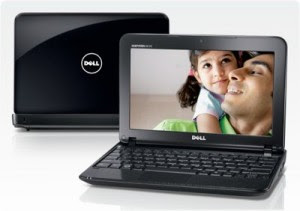
Equipped with an Intel Atom N455 1.66 GHz with 512 KB L2 cache, 667 MHz FSB which delivers powerful performance that is suitable for you to use streaming, you do a simple task, and better battery efficiency. 1333MHz processor with 1 GB of installed DDR3 RAM and 160 GB SATA hard drive (5400 RPM) is enough storage for photos and video.
Dell Inspiron IM1018-AMZBLK netbook also integrated Intel Graphics Media Accelerator 3150 support Microsoft DirectX 9.0 as well, you can play your favorite games, play videos with high image quality and amazing detail to all the people who appear on your screen. they run on the operating system Windows 7 Starter.
HD 0.3-megapixel webcam with integrated digital microphone that ensures you stay connected through a video-chat, no matter wherever you are whether it be office, home, campus they will give the appearance of images with amazing detail and clear sound. 2 Watt speaker as an audio feature that produces a sound loud enough to meet your space, while the 3-your battery is used to provide durability up to 3 hours is simple.
Spesification:
- 10.1-inch high-definition white light-emitting diode (WLED) display with 1024 x 600 resolution.
- Integrated Intel Graphics Media Accelerator 3150 with Microsoft DirectX 9.0 support.
- 1.66 GHz Intel Atom N455 processor (512 KB L2 cache, 667 MHz FSB) combines performance and energy efficiency.
- 160 GB SATA hard drive (5400 RPM).
- 1 GB of installed DDR3 RAM (1333 MHz).
- 0.3-megapixel HD webcam with digital array microphone.
- Single speaker with 2 watts of power.
- 3-cell battery.
- Comfortable keyboard thats 92 percent the size of a standard laptop keyboard with curved keys for a comfortable fit.
- Dimensions and Weight: 10.55 x 7.76 x 1.3 inches (WxDxH); 4.36 pounds.
Saturday, July 20, 2013
Lenovo Ideapad U400 09932JU 14 Inch Laptops Review

Lenovo Ideapad U400 09932JU Laptop comes with a screen size of the display 14 "HD LED slim, wide screen with a resolution up to 1366 × 768 pixels and 16:9 aspect ratio is correct, which comes with user-friendliness of Windows 7 Home Premium 64 - bit. In addition , it also comes with a generation Intel Core ™ 2 i5-2450M processor with speeds up to 2.5 GHz to make the product more quickly and also comes with an area of 6 GB of memory and 500 GB hard disk space used for storage....
Wednesday, July 17, 2013
Acer Aspire 5720 15 4 inch Laptops Review
 Acer has launched its new laptop called as Acer Aspire 5720 15.4-inch multimedia laptop, featuring the latest Intel “Santa Rosa” notebook platform and the new “Gemstone” design.
The Aspire 5720 is powered by Intel Core 2 Duo processor with clock speeds in range from 1.8GHz to 2.4GHz and 800MHz front side bus. Acer’s new consumer notebook comes in two versions: the first feature Intel GM965 chipset and integrated Graphics Media Accelerator X3100, while the second has PM965 chipset paired with the recently announced ATI Mobility Radeon HD X2300 or DirectX 10-ready HD X2400 XT video card. As same as the similar 5920 with nVidia’s graphics, the Aspire 5720 has 15.4-inch high-brightness (220-nits) CrystalBrite TFT LCD with 1280×800 resolution and 8ms response time. The notebook’s sound is powered by Dolby-certified surround system and two built-in Acer 3DSonic stereo speakers.
The 5720 supports up to 4GB of main memory, when used with 64-bit operating system, since the 32-bit OS supports only up to 3GB. This laptop comes with SATA hard drive and DVD burner, but there is also an optional HD DVD optical drive.

Regarding communications, Acer Aspire 5720 provides 802.11a/b/g wireless, Gigabit Ethernet, a 56k modem and an optional Bluetooth. For audio/video conferencing there is Voice and Video over Internet Protocol (VVoIP) support via Acer CrystalEye web camera and an optional Acer Xpress VoIP phone.
The Aspire 5720 has three USB ports, ExpressCard/54 slot, a 5-in-1 card reader, and Firewire port. For external monitor and TV, there are a DVI-D port with HDCP support on models with dedicated graphics, a VGA out and an S-Video out.
Acer Aspire 5720 weigh starting at 6.17lbs with 6-cell battery and comes with Windows Vista Home Premium or Home Basic.
[Source laptoping]
Sunday, July 14, 2013
Acer TravelMate 5730 15 4 inch Laptop Review
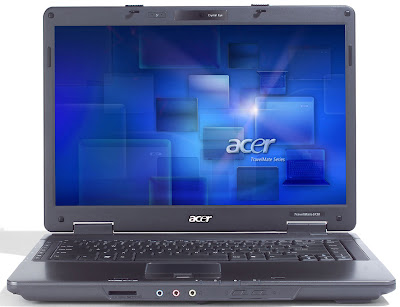
Acer one of the well-known laptop maker has announced the launch of its new laptop namely, Acer TravelMate 5730. The TravelMate 5730 is designed to meet requirements of computing and communication of professionals and business executives. It tends to go for fast connectivity, data management and graphic presentation to the latest mark of advancement. Excessive mobility of the users has been duly taken into consideration in selection of features of this laptop.
Features
Acer TravelMate 5730 laptop is fitted with cutting-age dual core processor, full graphic provisions, and wired or wireless connectivity. This laptop is powered with Intel Core2Duo T5870 Processor (2.0 GHz, 2 MB L2 Cache, 800 MHz FSB). It has 15.4-inch WXGA widescreen display. The 2 GB RAM and 320 GB HDD SATA Hard drive device are supported with Operating System, Vista Business XP Pro. The installed 2GB memory is expandable up to 4 GB. Chassis of this machine is made of magnesium alloy for protection against drop and pressures. The TM5730 provides efficient performance during mobility. This laptop measures 14.2 inches x 1.2 inches x 6.4 inches and it weighs 2.9 kg – 2.99 kg.
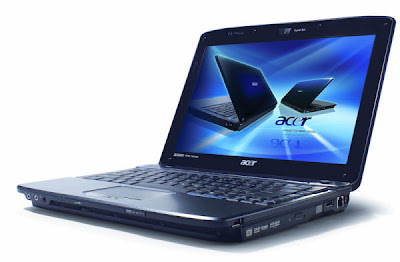
Display Screen Size
Acer TravelMate 5730 laptop It has 15.4 inch wide TFT WXGA screen with 1280 x 800 pixel resolution. The viewing ratio of the display is 16:10 and it can offer the users with option of multi window viewing with the help of Acer GridVista technology that uses the newest built in graphics media accelerator chip by Intel. The display features 16.7 million colours.
Webcam and Stereo
On the top position of the display, the notebook features a 1.3 MP resolution Crystal Eye webcam. There is no rotating action of this webcam as it is placed in a fixed position. There is no zoom or face tracking features to in the webcam. Apart from the webcam, Acer TravelMate 5730 includes two integrated Acer 3DSonic stereo speakers that support Sound Blaster Pro and MS-Sound compatible audio output by the help of Realtek HD audio hardware. In addition, there is integrated stereo microphone that is loaded with Aver PureZone technology.
Ports
Acer TravelMate 5730 comes with eSATA/USB combo port, three USB 2.0 ports, a Type II PC Card slot, ExpressCard/34 slot, HDMI digital out port and IEEE 1394 port.
Source; {mastergadgets.com}

Tuesday, July 9, 2013
LG X140 Netbook Unveiled Features 10 1 inch Display Review

With Windows 7 Starter preloaded, the new LG X140 netbook has 10.1-inch (25.6 cm) WSVGA Glare LED backlite display powered by integrated Intel GMA HD graphics offering 1366 x 768 (HD) pixel resolution and includes WiFi 802.11b/g/N WiFi, Bluetooth 2.1+EDR, USB 2.0 ports and 0.3 MP webcam.
The netbook is also DLNA (Digital Living Network Alliance) capable allowing entertainment devices within a home to share media contents with each other seamlessly across a home network.
The LG X140 comes with 6Cell (Li-Ion, 5200mAh) and optionally offers 9cell (Li-Ion, 7800mAh) or 6Cell (Li-Ion, 4400mAh) and also features a SIM card slot on certain models allowing 3G modem connectivity that might come an standard or optional.
Spesification LG X140 Netbook
- Intel ATOM N450 ULV (5.5 watt), 1.66 GHz
- Intel Mobile NM10 express chipset, 512 MHz L2 Cache
- 2GB SDRAM
- 320 GB 5400 rpm HDD
- 10.1-inch (25.6 cm) WSVGA LED backlit display, 1366 x 768 HD pixel resolution
- Intel HD graphics
- WiFi 802.11b/g/N
- 3G Network ready (selected model)
- Bluetooth 2.1
- Ethernet LAN
- 2x USB 2.0 ports
- 0.3 MP Webcam
- Integrated Mic
- 6Cell(Li-Ion, 5200mAh), 9cell(Li-Ion, 7800mAh)/6Cell(Li-Ion, 4400mAh)
- Dim – 270 (W) x 185 (D) x 25.4~31.7 (H) mm
- Windows 7 Starter
- Weight – 1. 45 kgs.